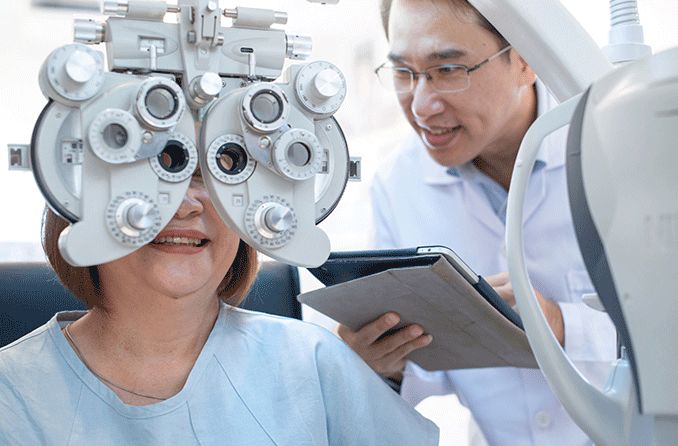



A Bachelor of Science in Optometry (BSc Optometry) program is designed to educate students in the field of eye care and vision health.
A Bachelor of Science in Optometry (BSc Optometry) program is designed to educate students in the field of eye care and vision health. The curriculum typically includes foundational courses in biology, anatomy, physiology, optics, and ophthalmic instrumentation, followed by specialized subjects such as optometric optics, visual optics, contact lenses, and eye diseases. Practical training is a crucial component, and students often engage in clinical internships to develop hands-on skills in conducting eye examinations, prescribing corrective lenses, and managing vision-related issues. Facilities for BSc Optometry programs usually include well-equipped optometric clinics with the latest diagnostic and vision testing equipment, providing students with real-world experience.
A program in Medical Imaging Technology focuses on training students in the use of advanced imaging equipment for diagnostic purposes. The curriculum typically includes foundational courses in anatomy, physiology, and medical sciences, followed by specialized subjects such as radiographic techniques, computed tomography (CT), magnetic resonance imaging (MRI), ultrasound, and nuclear medicine. Students learn to operate and interpret images produced by various medical imaging modalities. Clinical internships and practical training are integral components of the program, allowing students to apply theoretical knowledge in real-world settings. Facilities for Medical Imaging Technology programs often include well-equipped imaging labs with the latest technology, simulation rooms, and collaboration with medical institutions for hands-on experience.